CMF Harmonization Across Global Manufacturing Systems
Calphalon Electrics Case Study
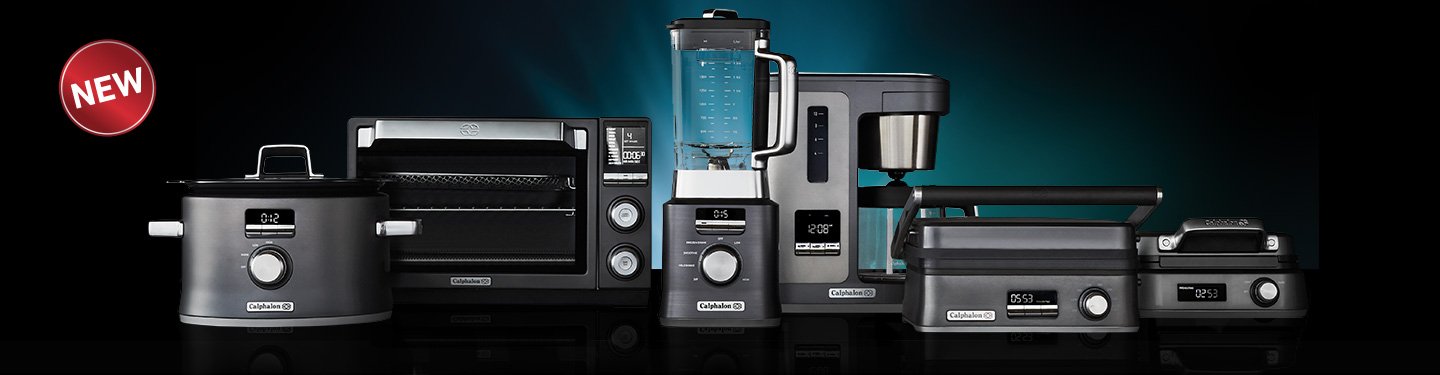
Platform Finish Architecture Standardized CMF execution across multiple factories, suppliers, and product categories, creating consistent product quality and brand cohesion at manufacturing scale.
When
2018
the CHALLENGE
Calphalon’s electrics portfolio was being produced across multiple factories in China, with significant variation in CMF execution despite aligned design intent.
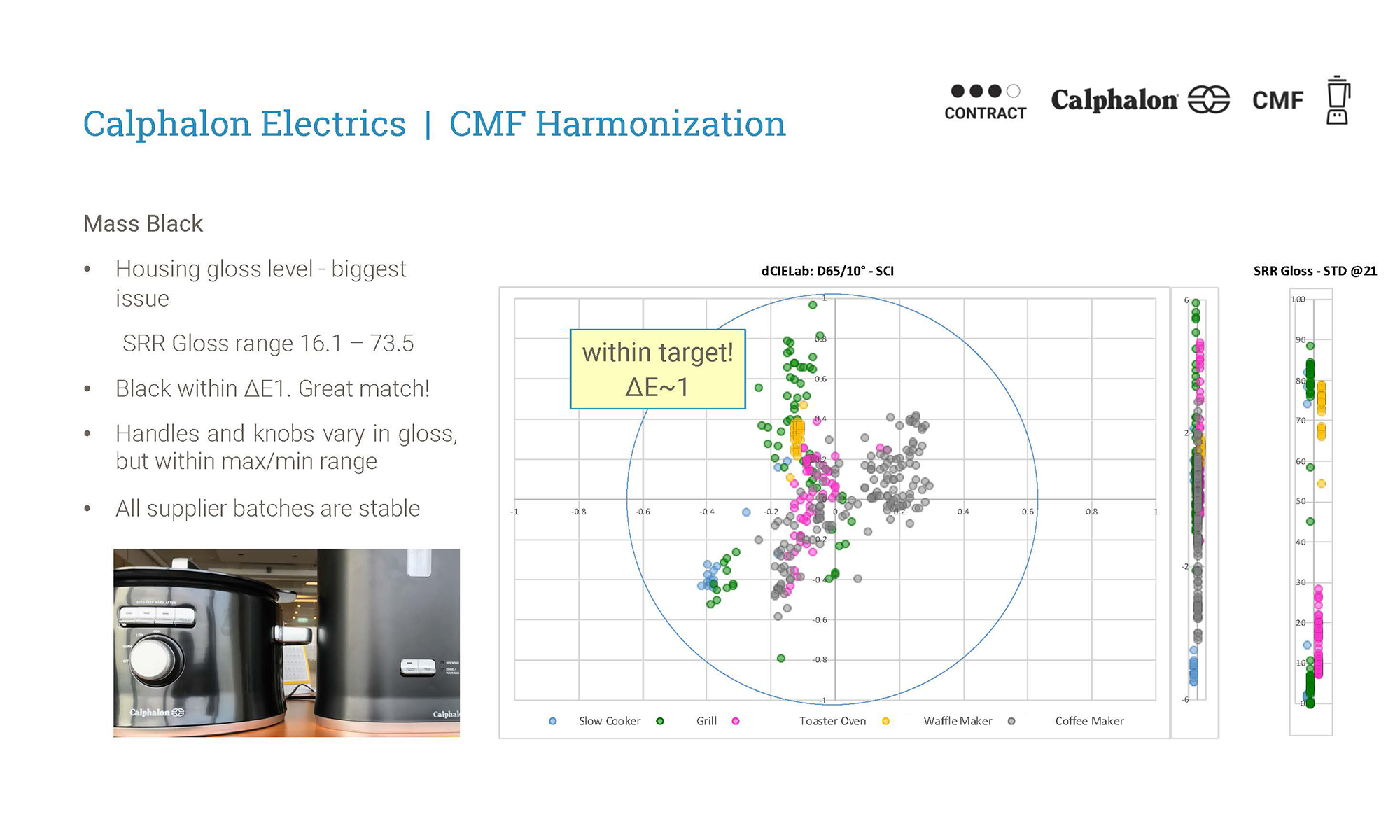
Products intended to read as a cohesive family appeared inconsistent at retail. Key issues included: • Inconsistent color, gloss, and stainless steel texture across product lines • Supplier variation despite shared CMF targets • No standardized measurement or validation system • Subjective pass/fail decisions by untrained factory inspectors • No unified global CMF quality control process
THE INTERVENTION Led a hands-on CMF harmonization initiative across China to diagnose variation and build a measurable execution system.
Key actions included: • Conducted 250+ CMF measurements across 5 factories and multiple suppliers • Established tolerance windows for color, gloss, and finish variation • Implemented color acuity testing to qualify CMF decision-makers • Introduced standardized measurement tools and training in partnership with X-Rite • Refined master targets using benchmark products and corrected out-of-tolerance materials • Aligned suppliers, QC, engineering, and design teams under shared validation standards THE OUTCOME • Achieved CMF consistency across multiple factories and suppliers • Reduced core finish variation to approximately ΔE 1 • Standardized gloss and texture ranges across product families • Qualified factory and internal teams for objective CMF approval • Restored alignment between design intent and production reality
STRATEGIC IMPACT This initiative transformed CMF from subjective aesthetic judgment into a measurable manufacturing system.
It enabled Calphalon to: • Maintain brand cohesion across complex global supply chains • Reduce production risk caused by variation and supplier misalignment • Establish repeatable validation and approval processes • Align design, engineering, and manufacturing around objective standards
KEY TAKEAWAY CMF consistency is not achieved through design intent alone, it requires measurable systems, trained decision-makers, and supplier alignment.
This engagement demonstrates how CMF governance translates design intent into manufacturable reality at scale.
Build CMF Systems That Scale
For teams managing multiple factories, suppliers, and product lines